
ZEROHEIGHT
Turning 100 agency enquiries into a new revenue stream in under a month
As Senior Product Designer at zeroheight, I was the sole designer tasked with owning the design response to a surge of agency interest in the product, validating whether a new customer segment was worth building for and designing an MVP to test it.
CHALLENGE
Zeroheight received interest from over 100 agencies (70% of them potential new customers) but our existing offering didn’t meet agency needs around styleguide management, client separation, billing control, transferability, and pricing.
Defining Success
I started by running a session with representatives of various areas of the business (a designer, an engineer, a customer success representative, a PM, and a data analyst) to create an impact map . This made it clear which behaviours we needed to see from agencies and their clients in order to validate the product. From this, we defined four success metrics to measure against after launch:
12% of waitlisted teams purchase the agency plan at full price
53% invite at least one client editor
57% actively use more than one project
76% say they'll use zeroheight with their next client

Impact mapping for product discovery
Approach
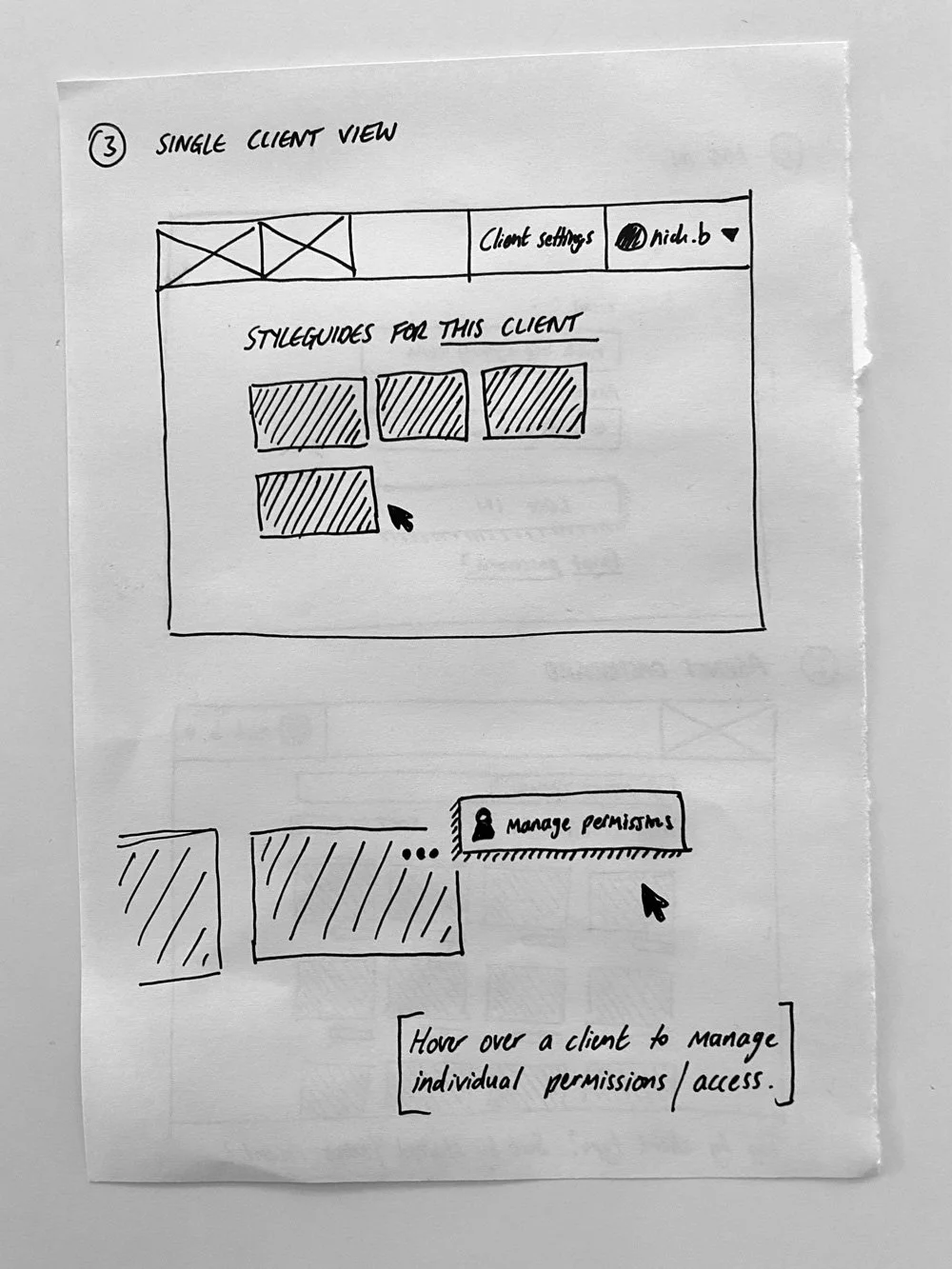
With a tight three-week deadline, I ran a condensed design sprint loosely based on Jake Knapp's book Sprint. I didn't follow the process to the letter but the framework gave the work a useful structure and kept the pace. The goal was to move from problem to validated concept quickly, without cutting corners on the things that mattered.




Testing
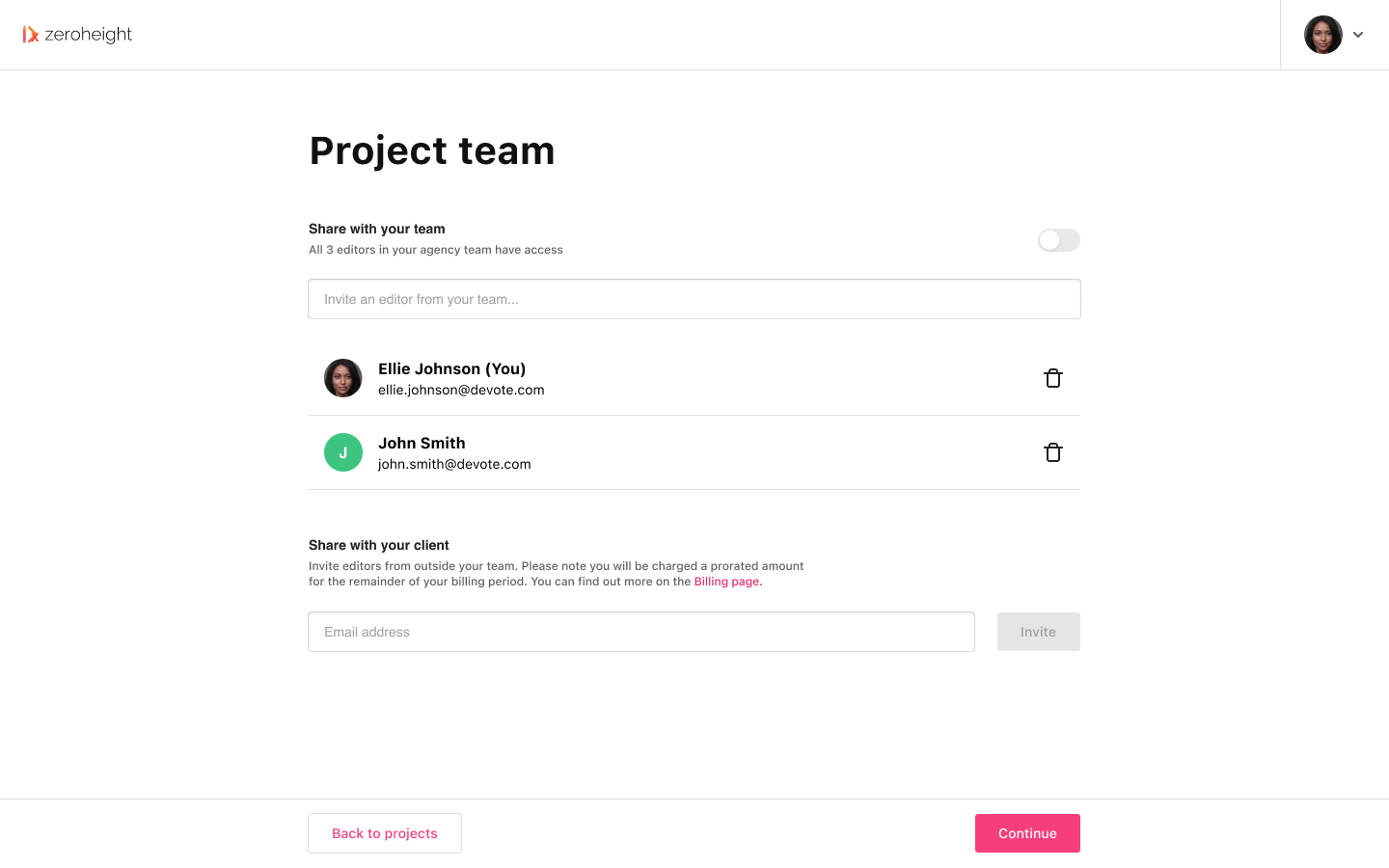
To validate my assumptions before committing to a full build, I ran remote usability sessions with 7 agencies who had already expressed interest in a zeroheight agency plan, making them as close to real future customers as possible. Using a Figma prototype, I gave each participant a realistic scenario: they were a designer at an agency setting up a new client project and creating a styleguide.
I was particularly focused on how they navigated the new project structure, managed permissions between their internal team and the client, and handled the eventual handover of work.


Key learnings
While some findings confirmed what we expected, others revealed needs we hadn't fully anticipated, particularly around handover, client ownership, and how agencies position the value of design documentation to their clients.

Simplifying the MVP
The interviews made it clear that we were trying to solve too many problems at once. To give the MVP the best chance of success, I went back through the findings and cut anything that wasn't essential to validating the core concept. Key cuts included:
Replacing the left-hand project switcher with a simpler dashboard
Removing the right-hand contextual team manager panel
Simplifying dashboard cards to show only styleguides
Supporting only Figma (used by 75% of our users)
Dropping Slack integration for launch
No syncing between projects
No duplicating or transferring of styleguides or design uploads


Results
16% of waitlisted teams purchased the Agency plan at full price (Target: 10%).
0% of teams have invited a client editor (Target: 50%). This is likely due to the time required to get work ready for sharing.
25% of teams are using more than one project (Target: 50%). Most are trialling the plan with a single client initially.
75% say they plan to use zeroheight with their next client.
Next steps
The results pointed to clear opportunities for the next iteration. The low client editor invite rate suggested agencies were happy to trial the product with a single client but weren't yet seeing enough value to expand further. This felt less like a gap in onboarding and more like a signal that the product needed to do more to demonstrate its value early on. The single-client trialling behaviour reinforced this, suggesting that with more time we may have seen usage grow naturally.
Both findings gave the team a focused direction for what to prioritise, though ultimately the agency product was shelved before a second iteration could begin.